Aeronox Solutions

best Chrome Extensions for Digital Marketing Agencies
Blog

Best Chrome Extensions As a Digital Marketing Agency (Boost Productivity & Results!)

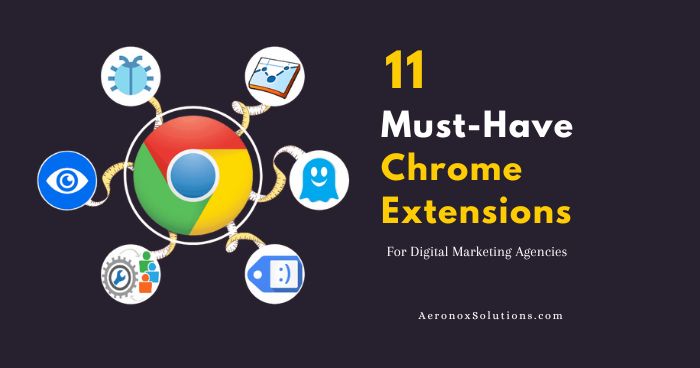
Google Chrome extensions are game-changers for digital marketers—they streamline workflows, uncover hidden insights, and turn hours of manual work into a few clicks. But let’s be honest: with thousands of extensions flooding the Chrome Web Store, finding the right ones feels like searching for a needle in a haystack.  Must-Have Chrome Extensions for Digital Marketing Agencies Worse yet, many extensions are outdated, clunky, or ineffective. As a digital marketing agency, your team needs tools that deliver whether it’s auditing competitor SEO, supercharging social media campaigns, or simplifying analytics. That’s why we’ve curated the best Chrome extensions every marketer should install today. These tools are battle-tested by agencies, designed to boost productivity, enhance data accuracy, and save precious time so you can focus on what matters: driving results for your clients. Let’s dive in. 1. Utm.io – The Ultimate UTM Builder for Precise Campaign Tracking As a digital marketer, tracking campaign performance is non-negotiable. But manually creating UTM parameters for every link? That’s a recipe for errors and wasted time. Enter Utm.io, a must-have Chrome extension that automates and simplifies UTM tagging—so you can focus on optimizing campaigns instead of debugging broken links. Why Digital Marketing Agencies Need UTM.io Effortless UTM Generation – Build properly structured UTM tags in seconds with pre-filled sources, mediums, and campaigns. Error-Free Links – Eliminates typos and inconsistencies that skew analytics data. Bulk Link Creation – Perfect for agencies managing multiple campaigns (e.g., email, social, ads). Template Library – Save frequently used UTM presets for one-click tagging. Real-Time Preview – See exactly how your tagged URLS will appear before sharing. Pros  ✔ Saves hours of manual work – No more copying, pasting, or guessing UTM parameters. ✔ Reduces human error – Ensures clean, consistent tracking across all campaigns. ✔ Integrates with Google Analytics & Bitly – Streamlines data consolidation. ✔ Great for teams – Shared templates keep everyone on the same page. Cons  ✖ Free version is limited – Advanced features (like custom domains) require a paid plan. ✖ No direct CRM integrations – Works best alongside other marketing tools. If your agency runs paid ads, email campaigns, or social promotions, UTM.io is a no-brainer. It ensures accurate tracking, improves reporting, and eliminates one of digital marketing’s most tedious tasks. Best for: Performance marketers, PPC specialists, and agencies managing multi-channel campaigns. 2. vidIQ Vision – Your Secret Weapon for YouTube Growth & Optimization For digital marketing agencies handling YouTube campaigns, vidIQ Vision is an indispensable Chrome extension that takes the guesswork out of video SEO, competitor analysis, and content strategy. It’s like having a YouTube growth coach right in your browser, helping you craft high-performing videos that rank, engage, and convert. Why vidIQ Vision is a Must for YouTube Marketers Real-Time SEO Scoring – Instantly evaluates your video’s title, tags, and description for better rankings. Competitor Insights – Spy on top-performing videos in your niche to reverse-engineer their success. Keyword Research – Discover high-traffic, low-competition terms to target in your videos. Trend Alerts – Stay ahead with topics and viral opportunities in your industry. Engagement Analytics – Track likes, comments, and retention rates to refine your content strategy. Pros  ✔ Boosts YouTube SEO – Helps optimize videos for maximum visibility. ✔ Saves Research Time – No more manual keyword hunting or competitor analysis. ✔ Data-Driven Decisions – Provides actionable insights to improve CTR and watch time. ✔ Free Plan Available – Great for beginners, with premium upgrades for advanced features. Cons  ✖ Premium Features Are Pricey – Advanced analytics require a paid subscription. ✖ Can Feel Overwhelming – New users may need time to explore all the tools. If your agency manages YouTube channels or video ad campaigns, vidIQ Vision is a game-changer. It turns raw data into winning video strategies, ensuring your content gets the views and engagement it deserves. 3. Grammarly – The AI-Powered Writing Assistant Every Marketer Needs In digital marketing, clear, error-free communication is non-negotiable—whether you’re crafting emails, blog posts, social captions, or ad copy. Grammarly is the ultimate Chrome extension as your 24/7 writing editor, ensuring your messaging is polished, professional, and persuasive. Why Grammarly is Essential for Marketing Teams Real-Time Grammar & Spell Check – Catches typos, awkward phrasing, and punctuation errors instantly. Tone Adjustments – Helps tailor your writing to sound confident, friendly, or professional based on your audience. Plagiarism Detection – Flags duplicate content to protect your SEO and originality (Premium feature). Style & Clarity Suggestions – Improves readability by trimming wordiness and fixing vague language. Multi-Platform Compatibility – Works seamlessly in emails, Google Docs, social media, and CMS platforms. Pros  ✔ Elevates Brand Credibility – Ensures error-free, professional communication across all channels. ✔ Saves Editing Time – Reduces back-and-forth revisions between team members. ✔ Adapts to Marketing Needs – Offers tone suggestions for ads, blogs, and client communications. ✔ Free Version is Powerful – Basic spelling and grammar checks at no cost. Cons  ✖ Advanced Features Require Premium – Plagiarism checks and full-style rewrites need a paid plan. ✖ Occasional Over-Suggestions – Sometimes, flags correct industry jargon or creative phrasing. Grammarly is more than just a spell-checker; it’s a productivity powerhouse for marketers who want to write with confidence, clarity, and impact. Whether drafting a client proposal or optimizing landing page copy, Grammarly ensures your words work as hard as you do. Best for: Content marketers, copywriters, social media managers, and agencies handling client communications. 4. SEOQuake – Your On-Demand SEO Audit Powerhouse For digital marketing agencies, on-page SEO analysis shouldn’t require a 10-step process. SEOQuake is a must-have Chrome extension that delivers instant website audits, competitor insights, and keyword data from your browser. Think of it as a Swiss Army knife for SEO professionals, giving you the metrics you need without slowing down your workflow. Why SEOQuake Belongs in Every Marketer’s Toolkit Instant SEO Audits – Check critical metrics (domain strength, backlinks, indexed pages) in one click. Keyword Density Analyzer – Optimize content by seeing exact keyword distribution. Competitor Benchmarking – Compare your site’s SEO health against rivals in seconds. SERP Overlay – View key SEO stats (PageRank, Alexa rank) directly in Google search results. Custom Reports – Export data for client presentations or internal reviews. Pros  ✔ Saves Hours of Manual Analysis – No more jumping between tools for basic SEO checks. ✔ Free & Lightweight – Delivers robust insights without expensive subscriptions. ✔ Great for Pitches & Audits – Quickly assess prospects’ websites during sales calls. ✔ User-Friendly Dashboard – Metrics are displayed clearly for fast interpretation. Cons  ✖ Limited Advanced Features – Deep backlink analysis requires tools like Ahrefs/SEMrush. ✖ Occasional Data

What is Competitor Analysis
Blog

What is Competitor Analysis? A Complete Guide for UK Businesses

What is Competitor Analysis? Competitor analysis is the process of evaluating your competitors’ strengths, weaknesses, strategies, and market positioning to gain a competitive edge. It involves gathering and analyzing data on their products, services, marketing efforts, customer feedback, and performance metrics. For UK businesses, this practice is critical to understanding market dynamics, identifying opportunities, and refining strategies in a highly competitive landscape. Why Competitor Research Matters in 2025 In the UK market is shaped by rapid digital transformation, evolving consumer behaviors, and economic shifts. Competitor research matters because it: Reveals Market Trends: Identifies emerging industry trends and customer preferences. Highlights Gaps: Uncovers underserved areas or weaknesses in competitors’ offerings. Informs Strategy: Guides pricing, marketing, and product development decisions. Mitigates Risks: Helps anticipate competitors’ moves and market disruptions. With Brexit-related changes, supply chain challenges, and increasing digital adoption, staying ahead requires a deep understanding of your competitors’ actions. The Role of Competitor Analysis in Business Growth Competitor analysis drives business growth by: Enhancing Differentiation: Pinpointing what sets your business apart to attract and retain customers. Optimizing Marketing: Understanding competitors’ campaigns to craft more effective messaging and channels. Improving Products/Services: Identifying gaps in competitors’ offerings to innovate or improve your own. Boosting Efficiency: Learning from competitors’ operational successes or failures to streamline processes. For UK businesses, this translates into better market positioning, increased customer loyalty, and sustainable revenue growth. How Aeronox Solutions Digital Agency Helps UK Businesses Aeronox Solutions, a UK-based digital agency, supports businesses with tailored competitor analysis services, including: Comprehensive Audits: Detailed reports on competitors’ digital presence, SEO, and social media strategies. Market Insights: Data-driven recommendations to capitalize on market opportunities. Custom Strategies: Bespoke marketing and growth plans based on competitor weaknesses and industry trends. Performance Tracking: Ongoing monitoring to keep your business ahead of the curve. By leveraging advanced tools and expertise, Aeronox empowers UK businesses to outperform competitors and achieve long-term success in 2025 and beyond. Key Benefits of Competitor Analysis Competitor analysis provides UK businesses with actionable insights that fuel growth and resilience. By systematically studying competitors, companies can make informed decisions, stay agile, and maintain a competitive edge in a dynamic market. Identifying Market Gaps Analyzing competitors helps uncover unmet customer needs or underserved market segments. For example: Product Gaps: Spotting features or services competitors lack, allowing you to innovate. Customer Pain Points: Reviewing competitors’ customer feedback to address issues they overlook. Niche Opportunities: Identifying untapped audiences or regions in the UK market. By filling these gaps, businesses can attract new customers and build loyalty among existing ones. Improving Marketing Strategies Competitor analysis enhances marketing effectiveness by: Benchmarking Campaigns: Studying competitors’ messaging, channels, and promotions to refine your own. Targeting Precision: Learning which audiences competitors prioritize to optimize your targeting. Content Insights: Analyzing competitors’ content strategies to create more engaging blogs, videos, or social posts. This ensures UK businesses allocate marketing budgets efficiently and resonate better with their audience. Boosting SEO Performance A strong SEO strategy is vital for visibility in 2025. Competitor analysis improves SEO by: Keyword Opportunities: Identifying high-value keywords competitors rank for but you don’t. Backlink Strategies: Analyzing competitors’ backlink profiles to secure similar or better links. Content Optimization: Learning from competitors’ top-performing pages to enhance your site’s structure and content. By adopting these insights, UK businesses can climb search engine rankings, drive organic traffic, and increase conversions. What is Competitor Analysis in Business? Competitor analysis in business is a strategic process that involves researching and evaluating competitors to understand their market position, tactics, and performance. This enables businesses to make informed decisions, refine their strategies, and identify opportunities for growth. For UK businesses operating in a dynamic 2025 market, competitor analysis is a cornerstone of staying relevant and competitive. Definition & Core Objectives Competitor analysis is defined as the systematic study of rival businesses to gather insights into their operations, strategies, and market presence. Its core objectives include: Understanding Competitors: Gaining a clear picture of who your competitors are and what they offer. Identifying Opportunities: Spotting gaps in the market or weaknesses in competitors’ strategies. Improving Decision-Making: Using data to inform pricing, marketing, and product strategies. Anticipating Threats: Predicting competitors’ moves to stay proactive and resilient. READ ALSO: How do I See Competitors Google Ads? Understanding Your Rivals’ Strengths & Weaknesses Analyzing competitors’ strengths and weaknesses provides a roadmap for differentiation: Strengths: Identify what competitors excel at, such as superior products, strong branding, or loyal customer bases, to benchmark your own performance. Weaknesses: Pinpoint areas where competitors fall short, like poor customer service or outdated technology, to capitalize on these gaps. This insight helps UK businesses refine their value proposition and target areas for improvement. How It Differs from Market Research While both competitor analysis and market research aim to inform strategy, they differ in scope: Competitor Analysis: Focuses specifically on rival businesses, their strategies, and performance metrics. Market Research: Examines broader market trends, customer behaviors, and industry dynamics. For example, competitor analysis might reveal a rival’s pricing strategy, while market research highlights overall consumer demand in the UK market. Together, they provide a holistic view for strategic planning. Types of Competitor Analysis Competitor analysis can be approached in various ways, each offering unique insights tailored to specific business needs. Direct vs. Indirect Competitors Direct Competitors: Businesses offering similar products or services to the same target audience, e.g., two UK coffee shop chains competing for the same customers. Indirect Competitors: Businesses offering different products or services that still compete for the same customer needs, e.g., a coffee shop and a juice bar vying for health-conscious consumers. Understanding both types helps UK businesses prioritize resources and tailor strategies. Product, Pricing, and SWOT Analysis Product Analysis: Compares features, quality, and customer feedback on competitors’ products to identify opportunities for innovation. Pricing Analysis: Examines competitors’ pricing models to optimize your own pricing strategy for profitability and market share. SWOT Analysis: Evaluates competitors’ Strengths, Weaknesses, Opportunities, and Threats to uncover strategic advantages and risks. These analyses provide actionable insights for UK businesses to refine offerings

What Is a Digital Marketing Agency
Blog

What Is a Digital Marketing Agency? Your Key to Digital Success

In today’s fast-paced digital world, businesses need a strong online presence to succeed. That’s where a digital marketing agency comes in. But what exactly is a digital agency, and how can it help your business grow? What Is a Digital Marketing Agency? A digital marketing agency specializes in providing online marketing solutions, including SEO, social media management, PPC advertising, content creation, and web design. Whether you’re a startup or an established brand, partnering with the best digital agency service UK can help you reach your target audience, boost engagement, and drive conversions. Digital agencies come in various forms, each focusing on different aspects of online marketing. For instance: Full-service digital agencies provide end-to-end solutions, covering everything from SEO and content marketing to social media, paid advertising, and web development. Creative agencies prioritize branding, design, and storytelling to create compelling digital experiences. SEO agencies specialize in search engine optimization to boost organic traffic. Digital advertising agencies focus on paid campaigns across platforms like Google Ads and social media. With these distinctions, you might wonder: What’s the difference between a creative agency and a digital agency? Or between a digital agency and a digital marketing agency? Don’t worry—we’ll break it all down for you. Below, you’ll find a detailed guide to the different types of digital agencies and their services, helping you understand which one aligns best with your goals. But first, let’s clear up a common question: How does a digital agency differ from a digital marketing agency? Digital Agency vs. Digital Marketing Agency: What’s the Difference? While the terms digital agency and digital marketing agency are often used interchangeably, they serve distinct roles in the digital landscape. Understanding the difference can help you choose the right partner for your business goals. A digital agency is your go-to partner for building and establishing your digital presence from the ground up. Think of them as digital architects and designers. Typical Services: Web & App Development – Custom websites, e-commerce platforms, and mobile applications. UX/UI Design – Creating seamless, engaging, and intuitive user experiences. Branding & Creative Strategy – From logos and color palettes to messaging and brand voice. Digital Marketing (Secondary) – Some offer SEO, ads, or social media—but it’s not their primary strength. What Is a Digital Marketing Agency? A digital marketing agency specializes in driving online traffic, generating leads, and boosting conversions. They focus on performance and measurable growth. Typical Services: Search Engine Optimization (SEO) – Improve your rankings and visibility on search engines. Paid Advertising – Google Ads, Meta, TikTok, LinkedIn, and other platforms. Social Media Management – Strategy, content, and community engagement (organic + paid). Email & Content Marketing – Nurture leads, retain customers, and increase lifetime value. Key Differences at a Glance Aspect Digital Agency Digital Marketing Agency Primary Focus Building & branding digital assets Driving traffic and conversions Core Services Web development, UX design, branding SEO, ads, social media, email Best For Startups or rebranding projects Businesses scaling leads, traffic, and sales Outcome A strong, professional digital foundation Targeted growth and measurable ROI Which One Do You Need? Choose a digital agency if you’re launching a new brand, redesigning your website, or need a full digital overhaul. Choose a digital marketing agency if you already have a web presence but need help increasing traffic, leads, or sales. Pro Tip: Some full-service digital agencies offer both branding and marketing under one roof. Always ask about their core strengths before committing. Types of Digital Agencies: Your Key to Digital Success The world of digital marketing is constantly evolving sometimes faster than we can blink. New platform features, shifting algorithms, and groundbreaking tools like AI are rewriting the rules daily. In this dynamic landscape, finding the right digital agency is like assembling your own team of superheroes each with a distinct power ready to catapult your brand to success. Each type of digital agency brings a unique specialty to the table, much like members of an elite ‘Avengers’ squad. Let’s dive into the digital universe and discover which heroes you need by your side! What is a Digital Marketing Agency? A digital marketing agency is a specialized firm that helps businesses grow, engage audiences, and drive revenue through strategic online marketing. These agencies combine expertise in technology, data analysis, and creative storytelling to maximize a brand’s digital presence across search engines, social media, email, and other digital channels. Unlike traditional marketing firms, digital marketing agencies focus exclusively on the online space, using measurable, data-driven strategies to deliver real-time results and scalable growth. What Does a Digital Marketing Agency Do? Digital marketing agencies offer a wide range of services, including: 1. Search Engine Optimization (SEO) Optimizes websites to rank higher on Google & Bing Improves organic traffic through keyword research, content optimization, and technical SEO 2. Pay-Per-Click (PPC) Advertising Runs targeted ads on Google Ads, Meta, LinkedIn, and TikTok Maximizes ROI through bid management and conversion tracking 3. Social Media Marketing Develops organic and paid strategies for Facebook, Instagram, LinkedIn, and more Increases brand awareness, engagement, and lead generation READ ALSO: Digital PR | Benefits of Having a Digital PR Strategy | PR VS SEO 4. Content Marketing Creates blogs, videos, infographics, and eBooks to attract and educate audiences Strengthens brand authority and supports SEO efforts 5. Email Marketing Designs automated email campaigns for lead nurturing and sales Boosts customer retention and repeat purchases 6. Web Design & Development Builds fast, mobile-friendly, and conversion-optimized websites Enhances user experience (UX) to reduce bounce rates 7. Analytics & Performance Tracking Uses tools like Google Analytics and HubSpot to measure campaign success Adjusts strategies in real-time based on data insights Who Needs a Digital Marketing Agency? Startups needing rapid growth SMBs lacking marketing resources E-commerce stores optimizing conversions Enterprise brands scaling globally Local businesses improving online visibility What is a Creative Agency? A creative agency is a powerhouse of imagination and strategy, specializing in brand storytelling, visual identity, and innovative campaigns that captivate audiences. Unlike general marketing firms, creative agencies focus on big ideas, emotional connections, and memorable experiences—turning brands into cultural icons through art, design, and compelling narratives. What Does a Creative agencies Do? Creative agencies blend artistry

What is a digital PR
Blog

Digital PR | Benefits of Having a Digital PR Strategy | PR VS SEO

In new era, the way brands communicate, engage, and build relationships has undergone a massive shift. Digital public relations (PR) has emerged as a game-changer, offering businesses innovative ways to amplify their voice, enhance brand credibility, and foster meaningful connections with their audience. While traditional PR and digital PR share the same core objectives, boosting brand awareness and shaping public perception, their strategies, platforms, and success metrics couldn’t be more different. Digital PR leverages online channels, data-driven insights, and interactive content to reach audiences in real time, making it a powerful tool for modern businesses. In this blog, we’ll break down the essentials of digital PR, explore its key benefits, and provide actionable steps to create a winning strategy that drives real business results. Let’s dive in! What is Digital PR? The Modern Approach to Brand Growth Digital PR (public relations) is a powerful marketing strategy that leverages online platforms to boost a brand’s visibility, credibility, and authority. Unlike traditional PR, which relies heavily on print media and broadcast outlets, digital PR focuses on securing high-value online coverage, building relationships with influencers and journalists, and creating shareable, SEO-friendly content. At its core, digital PR helps businesses strengthen their reputation, attract targeted audiences, and improve search rankings all while fostering meaningful engagement in the digital space. Let’s explore the key components of digital PR and how it can drive measurable growth for your brand. Digital Public Relations Key Components Digital PR uses online channels to boost brand authority, visibility, and trust, leveraging digital tactics for measurable impact. Core Elements Online Authority: Earn backlinks from trusted media and mentions in industry publications to enhance SEO and credibility. Strategic Content: Produce data-driven reports, expert insights, and newsworthy stories optimized for media and search. Media & Influencer Engagement: Build relationships with journalists and influencers, pitching tailored, trending stories. Multi-Channel Distribution: Amplify coverage via social media, email, and paid promotion for maximum reach. Reputation Management: Monitor brand sentiment and address negative press quickly to maintain trust. Benefits of  having a Digital PR Strategy As consumers increasingly research online before deciding, a robust digital PR strategy delivers critical advantages: Enhanced Search Visibility Digital PR strengthens your brand’s online presence by securing backlinks from high-authority websites. These quality links signal trust to search engines, improving your organic rankings. As your domain authority grows, so does your website traffic from search results. Unlike paid ads, this approach delivers sustainable, long-term visibility. It’s a proven way to outperform competitors in SEO. Increased Brand Credibility When reputable media outlets and industry publications feature your brand, it instantly boosts consumer trust. Earned media placements act as third-party endorsements, validating your expertise. This credibility influences purchasing decisions, as buyers rely on trusted sources. Over time, consistent coverage establishes your brand as an industry leader. Targeted Audience Reach Digital PR allows you to craft tailored pitches that resonate with specific audiences. By collaborating with niche influencers and journalists, your message reaches the right people. Unlike broad advertising, this strategy ensures engagement from high-intent consumers. Personalized outreach increases the chances of conversion while minimizing wasted effort. Amplified Brand Awareness Initial media coverage is just the beginning—social sharing, email campaigns, and paid promotions extend its lifespan. Each mention creates ripple effects, exposing your brand to new audiences. Strategic repurposing across platforms maximizes visibility without additional effort. The result? A compounding effect that keeps your brand at the top of your mind. Proactive Reputation Control Monitoring tools track brand sentiment in real-time, allowing quick responses to potential crises. Addressing negative press early prevents long-term damage to your reputation. Positive engagement with feedback also builds consumer trust. A well-managed reputation ensures stability in competitive markets. Measurable ROI Unlike traditional PR, digital PR provides concrete data—tracking website traffic, lead generation, and conversions. Analytics reveal which strategies deliver the best returns, enabling optimization. This data-driven approach aligns PR efforts with business goals, proving its value in revenue growth. Every dollar spent can be justified with clear performance metrics. Many businesses, especially small to medium ones, partner with a professional content marketing strategist or a full-service digital marketing agency to assist with their digital PR plan. Why It Matters Now: With online research shaping consumer decisions, digital PR ensures your brand excels in visibility, trust, and engagement, critical for staying competitive. How to Create Digital PR Strategy? Step By Step Guide 3 Key Metrics to Measure Digital PR Success Digital PR isn’t just about generating buzz—it’s about driving measurable business impact. To evaluate your strategy’s effectiveness, track these three critical metrics: 1. Backlinks & Domain Authority (DA) Why it matters: High-quality backlinks from authoritative sites boost SEO and improve search rankings. How to measure: Use tools like Ahrefs or Moz to track the number of referring domains and DA growth. Success indicator: An increase in organic traffic and keyword rankings signals strong digital PR performance. 2. Media Placements & Brand Mentions Why it matters: Earned coverage in reputable publications builds credibility and expands reach. How to measure: Monitor mentions using Google Alerts, Mention, or PR tracking tools. Success indicator: Features in target media outlets and positive sentiment in brand conversations. 3. Website Traffic & Engagement Why it matters: PR-driven content should attract and retain visitors, leading to conversions. How to measure: Analyze traffic sources in Google Analytics (look for referral and organic spikes). Success indicator: Increased time on page, lower bounce rates, and higher lead generation. Digital PR success isn’t just vanity metrics, it’s about quality backlinks, earned media, and engaged traffic. Consistently track these KPIs to refine your strategy and maximize ROI. Should You Partner With a Third-Party Digital PR Agency? Deciding whether to partner with a digital PR agency depends on your resources, expertise, and goals agencies bring established media relationships, proven strategies, and time-saving execution, making them ideal for brands seeking faster results, stronger SEO, and high-impact coverage without building an in-house team. However, if you have niche industry knowledge, tight control over messaging, or limited budgets, handling PR internally may be more cost-effective. The key is weighing the trade-offs: agencies offer efficiency and scalability but at

How SEO Drives Lead Generation in B2B Businesses
Blog

How SEO Drives Lead Generation in B2B Businesses?

In the digital-world era, your B2B company requires something more than an excellent product or service it has to be seen. That’s where SEO enters the picture and makes a substantial impact. Differently put, while money-driven ads get cut off the moment the funding is exhausted, SEO enables you to receive good-quality leads all the time by exposing your business to decision-makers and professionals on the lookout for solutions such as yours. How SEO Drives Lead Generation in B2B Businesses? But here’s the catch: B2B SEO is different from B2C. Your clients aren’t impulse shoppers; they’re researching, comparing, and deciding slowly. What this implies is that your SEO strategy needs to do more than just bring in visitors it needs to bring in the right visitors, assist potential customers, and assist them in buying. How do you get SEO to work for your B2B business? In this guide, I will reveal all. You will learn proven strategies, best practices, and expert advice to optimize your site, rank higher on search engines, and convert visitors into quality leads. Let’s begin and start seeing results Why SEO is Important for B2B Lead Generation If you want long-term success in the B2B space, SEO is not just an option. It’s extremely important. As opposed to paid advertising that ceases to function the instant you discontinue funding, SEO establishes consistent, organic growth that keeps delivering good leads every month. Here’s why an investment in SEO is one of the top choices for your B2B company: It’s Cost-Effective & Renders Long-Term Results: Treat SEO as a capital investment, not an expenditure. You are able to do well using paid advertising, yet you must constantly spend money to keep it. SEO places your site on the search engines without you spending anything, with visitors and leads at no additional advertising cost. While your site remains top on rankings, you continue to receive possible buyers without a per-click pay. It Captures High-Intent Buyers: Not every visitor to your site is the same. The real strength of SEO is reaching individuals searching for answers like yours. By optimizing for the right keywords, you connect with decision-makers and business professionals who are already actively seeking making them much more likely to become customers. It Sets Your Authority & Credibility B2B buyers don’t act impulsively. They want to do business with companies they believe in. Good SEO helps you prove that your company is the leader in its field by having you noticed on search results pages, earning backlinks from authority sites, and offering useful content that answers the questions of your audience. The more visible and authoritative you become, the more likely potential clients will select you over others. It increases conversion rates: When a person searches for your company on a search engine, they are already looking for what you are providing. That means that they are likely to read more of your content, ask for a demo, or call you for advice. Compared to other forms of marketing, organic search traffic primarily brings highly interested prospects who are ready to buy. Main point? SEO is not about getting traffic, it’s about getting the right traffic. Done correctly, it assists your B2B company in finding decision-makers, establishing trust, and generating leads without necessarily having to pay for ads. The sooner you invest in SEO, the sooner you will reap the benefits. Are you prepared to increase lead generation? Let’s look at the top SEO tips for success in B2B! READ MORE: What Is Cloud Stacking SEO? Is it Still Worth It? B2B vs. B2C SEO: Key Differences You Need to Know While B2B and B2C SEO share common principles, their goals, audience behavior, and content strategies differ significantly. Audience & Decision-Making: B2B SEO targets business professionals and decision-makers who conduct extensive research before purchasing. The sales cycle is long and complex, involving multiple stakeholders. B2C SEO focuses on individual consumers making quick, emotion-driven purchases. Buying decisions happen within minutes or hours. Example: A B2B buyer searches for “best CRM software for enterprise sales” and compares options, while a B2C buyer searches for “best wireless earbuds under $100” and makes an immediate purchase. Keyword Strategy & Search Intent: B2B SEO focuses on long-tail, informational, and transactional keywords, catering to buyers researching solutions. B2C SEO targets shorter, high-volume, commercial keywords, leading directly to product pages and purchases. Example: B2B: “How to implement AI in supply chain management” B2C: “Best running shoes for women” Content Strategy: B2B SEO relies on educational, in-depth content to nurture leads, including: Whitepapers & Case Studies Webinars & Product Demos Comprehensive Guides B2C SEO uses engaging, persuasive content to drive immediate conversions, such as: Product Reviews & Descriptions Social Media & Influencer Content How-To Guides & Videos Example: B2B: “The Ultimate Guide to B2B Lead Generation with SEO” B2C: “10 Must-Have Sneakers for Summer 2024” Sales Funnel & Conversions:   B2B buyers need multiple touchpoints before converting. SEO should support lead nurturing with email marketing, remarketing, and case studies. B2C buyers make quick, transactional decisions, so SEO should focus on fast-loading pages, mobile-friendliness, and strong calls to action. READ  MORE: How to Improve CTR on Google Ads: 7 Expert Tips for Better Campaign Performance Example: B2B: A visitor downloads a whitepaper, books a demo, and decides weeks later. B2C: A shopper reads a review and buys immediately. B2B SEO focuses on relationship-building and authority, while B2C SEO is about quick engagement and conversions. Understanding these differences helps businesses tailor their strategy for better results. 7 Proven SEO Strategies to Generate B2B Leads 1. Optimize for High-Intent Keywords If you want to attract serious B2B buyers, you need to focus on the right keywords. High-intent, commercial, and long-tail keywords help connect you with decision-makers actively searching for solutions like yours. Find the Right Keywords: Keyword research is the foundation of SEO. Use tools like: Google Keyword Planner – Free and great for basic research. Ahrefs & SEMrush – Advanced tools for competitor analysis and search trends.

AI Chatbots vs Traditional Support
Blog

AI Chatbots vs Traditional Support: Which One Wins for Your Business?

Your customers won’t wait so why should your support? In an era where 90% of consumers expect instant responses, businesses face a critical choice: cling to AI Chatbots vs Traditional Support. The stakes? Faster resolutions, lower costs, and happier customers or the risk of being left behind. AI Chatbots vs Traditional Support AI chatbots don’t just answer questions; they transform support into a 24/7 profit engine, handling thousands of queries at once while cutting response times from hours to seconds. But can algorithms truly replace human intuition and emotional intelligence? Or is the winning strategy a hybrid approach that blends the best of both worlds? This isn’t just about technology it’s about survival in the age of impatient customers. In this guide, I’ll dissect the strengths, weaknesses, and hidden costs of each model so you can deploy a support system that doesn’t just meet expectations but shatters them. The future of customer service isn’t human vs. bot. It’s about knowing when to automate and when to empathize. Let’s find your winning formula. What are AI Chatbots?  AI chatbots are intelligent virtual assistants powered by artificial intelligence (AI) and natural language processing (NLP) that can understand, learn from, and respond to customer queries in real-time, providing instant support and personalized interactions. Unlike traditional rule-based bots, AI chatbots analyze context, improve with each conversation, and seamlessly integrate with business systems to handle tasks like order tracking, FAQs, and lead generation all while reducing operational costs and boosting efficiency. For businesses looking to enhance customer engagement, AI chatbot development services offer tailored solutions that automate support, streamline operations, and deliver 24/7 assistance without compromising quality. READ ALSO:  3 Best ChatGPT Prompt Engineering What Are the Main Types of AI Chatbots? Understanding the differences between rule-based chatbots and AI-powered chatbots is key to choosing the right solution for your business. Rule-Based Chatbots operate on predefined scripts, following a fixed decision tree (e.g., “Type ‘1’ for billing support”). They’re simple to deploy but lack flexibility, ideal for basic FAQs but struggle with complex queries. AI-Powered Chatbots use machine learning (ML) and natural language processing (NLP) to understand intent, learn from interactions, and respond dynamically just like a human agent. These bots excel in personalized, context-aware conversations. AI Chatbots vs. Traditional Customer Service: A Comparative Analysis The modern customer service landscape presents businesses with a critical choice between AI-powered chatbots and traditional human support. This in-depth examination explores every facet of both approaches, providing the insights needed to make an informed decision for your organization. When deciding between AI chatbots and traditional customer support, consider the following key differences. 1. Availability and Response Time Analysis AI Chatbots: Operate continuously without breaks, 365 days a year Provide instantaneous responses (typically under 2 seconds) Eliminate queue times completely Maintain consistent performance regardless of inquiry volume Traditional Support: Typically limited to business hours (average 8-10 hour coverage) Subject to holiday schedules and time zone limitations Average response times range from 10 minutes to several hours Performance degrades during peak periods due to limited staff 2. Comprehensive Cost Breakdown AI Chatbot Economics: Initial development costs vary by complexity (5,000−5,000−50,000) Monthly maintenance typically 10-20% of development cost Can handle 1000+ concurrent conversations Cost per interaction decreases over time (as low as $0.01 per chat) Human Support Costs: Average salary: 30,000−30,000−50,000 per agent annually Additional 30-50% in benefits and overhead Training costs: 2,000−2,000−5,000 per new hire Physical infrastructure requirements (office space, equipment) 3. Capability and Performance Metrics AI Chatbot Capabilities: Process 80-90% of routine inquiries (FAQs, order status) Language support for 100+ languages simultaneously Consistent accuracy (95%+ for trained scenarios) Continuous learning through machine learning algorithms Human Agent Strengths: Handle complex, multi-step problem resolution Emotional intelligence for sensitive situations Creative problem-solving abilities Can interpret ambiguous or incomplete information 4. Implementation and Technical Considerations AI Implementation: Requires 4-12 weeks for development and training Needs integration with existing CRM and knowledge bases Requires ongoing optimization (5-10 hours monthly) Data security and compliance considerations Human Team Setup: Recruitment cycle: 4-8 weeks per position Training period: 2-4 weeks per agent Quality assurance programs needed Performance monitoring systems required 5. Customer Experience Impact AI Advantages: Immediate acknowledgment of inquiries Perfect recall of company policies Never frustrated or tired Available across all digital channels Human Advantages: Builds emotional connections Can exercise judgment and discretion Handles exceptions gracefully Provides personalized recommendations 6. Hybrid Approach Optimization Best Practices: Route simple inquiries to bots (60-70% of volume) Escalate complex cases to humans seamlessly Use AI for initial data collection before human handoff Implement bots for after-hours coverage Utilize AI analytics to improve human performance 7. Industry-Specific Applications Retail: Bots for order tracking (24/7) Humans for returns/exceptions Banking: Bots for balance inquiries Humans for fraud resolution Healthcare: Bots for appointment scheduling Humans for medical advice 8. Future Evolution Trends Increasing AI emotional intelligence Voice-based bot interactions Predictive support capabilities Augmented reality integrations Blockchain for verification 9. Key Decision Factors Choose AI When: High volume of repetitive inquiries 24/7 coverage needed Budget constraints exist Multilingual support required Choose Humans When: Dealing with sensitive issues Complex problem-solving needed Building customer relationships Handling exceptions For organizations seeking to implement AI solutions, professional development services can create customized implementations that integrate seamlessly with existing operations while maximizing ROI. READ ALSO: How to Create Viral AI Videos ? 5 Best Tools The optimal solution for most businesses involves a carefully calibrated combination of both approaches, leveraging the strengths of each while mitigating their limitations. Comparison Table: AI Chatbots vs. Traditional Support Here is a detailed breakdown of the differences between AI chatbots and traditional customer support. Feature AI Chatbots Traditional Customer Support Scalability Can handle unlimited simultaneous interactions Limited by the number of human agents Availability 24/7 service Restricted to business hours Consistency Delivers uniform responses Varies by agent experience and mood Cost One-time setup, low operational costs High ongoing costs (salaries, training, etc.) Handling Complexity Manages some complex tasks with AI logic Best for complex and sensitive issues Customer Experience Personalization through data-driven responses Human touch, empathy, and adaptability The Final Verdict: Striking the Perfect Balance

Scroll to Top